
MANAGEMENT MANTRA
MANAGEMENT MANTRA - “Think In Decades, Not Months” - Keshav Maheshwari, Managing Director, ALLEN Career Institute Overseas
- Sharmila Chand
- Jan 06, 2026
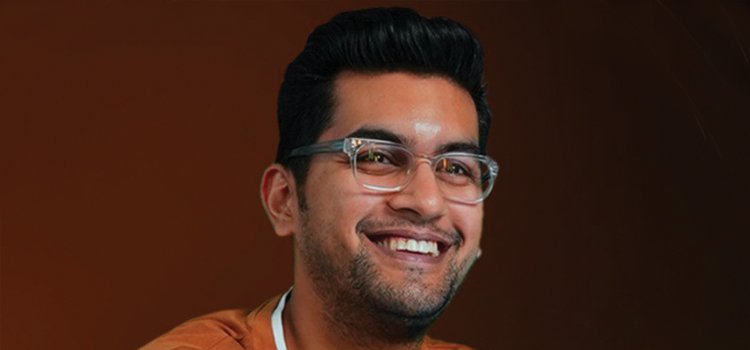
Keshav Maheshwari is a second-generation entrepreneur
from the family behind ALLEN Career Institute. However, his story is not one of
inheritance but of intentional reinvention. As the managing director of ALLEN
Overseas, Mr Maheshwari is expanding the institute’s footprint across the
Middle East and beyond, reimagining coaching and academic support for the
global Indian diaspora.
A Computer Science graduate from BITS Pilani (Dubai
Campus) with an MBA in Family Business Management from SP Jain School of Global
Management, he has lived, studied and worked across Dubai, Mumbai, Singapore
and Sydney. Mr Maheshwari has also worked in various roles at EY, Zomato and
early-stage startups and gained deep insights into market behaviour,
operational scaling and digital transformation. In an engaging conversation
with Sharmila Chand, Mr Maheshwari provides interesting insights
into his personal and professional lives.
How did your journey as an entrepreneur
begin?
I
come from the legacy of ALLEN Career Institute, a brand built over decades by
my family. But I did not intend simply to inherit my family legacy early on. I
wanted to reshape and future-proof our institution in changing times. I started
by immersing myself in every part of the business from classrooms and students’
feedback to technology and digital outreach. As managing director of ALLEN
Overseas, I have led the transformation from a primarily-offline coaching
institute to a hybrid, tech-led education enterprise. When COVID struck,
instead of simply preserving the existing model, I pushed for rethinking how we
deliver value even if it meant challenging tradition.
What are the key lessons learnt along the
way?
Over
time, several core lessons have become non-negotiables for me:
·
Processes must win over
personalities: In family-run businesses, it is easy to
let egos dominate decisions. But for scalability and consistency, you need
systems that outlast any individual.
·
Change is the only constant:
In education, digital overtook offline. Then the pendulum swung back. You must
be nimble and prepared to reinvent.
·
Think in decades, not months:
Every move should be strategic and forward-looking, not just reactive or
short-term.
·
Growth over continuity:
Continuity is important. But the focus should always be on enabling growth
building the future rather than resting on past glories.
What are the kinds of challenges you
faced, and how did you tackle them?
One
of the biggest challenges was the existential shock that COVID brought to a
brick-and-mortar coaching model. Overnight, physical classrooms could not
function. Many institutions simply ported content online and lost their
academic essence. I knew that would not suffice.
So, we took a dual approach: We re-engineered how
lessons are delivered, building a technology-first platform, while preserving
interactive pedagogy. We shifted mindsets internally, persuading faculty and
staff to embrace new roles, new processes and to see technology as an enabler,
not a threat.
The result: ALLEN became a hybrid model, combining
online and offline, where the learning value for a student remains constant,
regardless of channel.
What is that one trick which has helped
you keep your work and personal life balanced?
The
trick (or habit) I lean on is deliberate boundary-setting, carving fixed “off
hours” or “no meeting slots” and respecting them as non-negotiable. In those
hours, I do not check work email or take business calls. This protects mental
space. Also, I schedule rest, hobbies and family time as if they were meetings,
giving them equal weight.
How do you de-stress?
Music
is a trusted reset button for me. I enjoy singing and playing guitar, and
sometimes, I just plug into an instrument and lose track of time. I also like
to take short breaks for a walk, reading something non-business or catching up
with family and friends. Those little pockets of disconnection help me come
back with clarity.
Do you play any game which helps you in
your work?
I
would not say that I play competitive games regularly. But I do enjoy
strategy-based puzzles or mind games (like chess, logic puzzles). These sharpen
my ability to forecast moves, think multiple steps ahead and hold patience. In
business, you often need to plan not just for today, but anticipate reactions,
counter-moves and adapt accordingly. Such games help discipline strategic
thinking under constraints.
The broader lesson is to never rush into a move
without assessing many possible outcomes; stay calm under pressure; and
sometimes, sacrifice a small advantage today for a more sustainable win
tomorrow.
What message would you like to give to
youngsters on keeping work and personal life balanced?
·
Be intentional:
Do not let life be dictated by the next meeting or the next deadline. Schedule
family, rest and passion pursuits just like you do business tasks.
·
Protect your boundaries: Work
expands to fill all available time, unless you draw a clear line.
·
Know your non-negotiables:
Identify the minimal personal rituals (dinner with family, quiet time) you must
maintain, and defend them.
·
Learn to switch off: Modern
tools make us always reachable; practise disconnecting.
·
Pace yourself:
A career is a marathon, not a sprint. Burning out early does not help your
long-term journey.
What are you most passionate about?
I
am deeply passionate about transforming legacy institutions into future-ready
ones. That means blending tradition with innovation, preserving values but
evolving delivery. Also, I care about helping next-gen entrepreneurs
(especially in family businesses) to navigate the tricky transitions of legacy,
identity, systems and ego. My podcast, The Keshav Konnect, is a part of that
mission.
What lessons have you learnt in life as an
entrepreneur?
·
Systems outlast people:
Build scalable processes, not personal dependencies.
·
Resilience is built, not given:
In disruption, you survive by adapting and reinventing.
·
Think long-term:
Decisions should anchor the journey over years, not just quarters.
·
Ego is your enemy:
In family business especially, detaching personal ego from business decisions
is vital.
How would you like to define yourself?
I
would define myself as a learner before a leader. Titles and designations are
temporary, what stays is curiosity and the hunger to evolve. I see myself as
someone trying to balance legacy with innovation deeply rooted in values, but
never afraid to question convention. My journey is really about shaping an
institution that continues to impact lives long after we are gone.













Report By
View Reporter News