
SPIRITUAL CORNER
SPIRITUAL CORNER - Worship: Direct And Indirect
- IBJ Bureau
- Nov 09, 2026
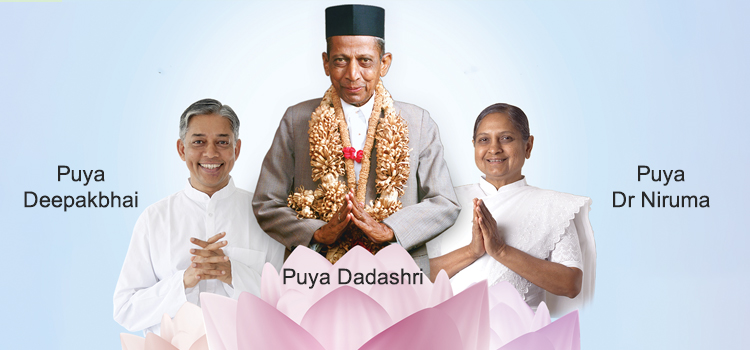
Questioner: In the path of devotion
(bhakti), do the worldly difficulties create a barrier?
Dadashri:
There are two kinds of bhakti marg (paths of
devotion). One is indirect (paroksh) worship, which yields worldly fruit
while it gradually elevates you spiritually. The second is direct (pratyaksh)
worship, which is directed towards the One in whom God has manifested. And it
is here that your work will get done. There are many obstacles in indirect
devotion (paroksh bhakti). One’s own thoughts become obstacles. The path
of bhakti (devotional worship) is good, but it may disappear according to the
changes in one’s circumstances, whereas Gnan always remains with You.
Questioner:
Who bears the responsibility in the path of devotion? Is it God?
Dadashri:
Yes. Even Narsinh Mehta (a great poet and devotee of Lord Krishna) used to say,
‘Dear Lord, liberate me!’ All devotees experience inner suffering (artata).
He expressed his inner pain to the Lord saying, ‘Dear Lord, liberate me from
this suffering.’ Even so, such a devotion is still good; his devotion was
exclusively to the Lord. Whose devotion is the highest? The true devotee’s. He
is not worshiping the real God, but he is worshiping the indirect God.
Nevertheless, it is still a true worship because it will lead to the direct (pratyaksh)
God (the Self within). But when can one be called a true devotee? When sankalp-vikalp
(worries and doubts) do not seize him, he is considered a true devotee. He
leaves everything to God, saying that God will do the sankalp-vikalp.
Whereas here, when a man gets his son married, he takes all the credit for it,
and when the child is born, he distributes sweets to everyone. But when the
child dies, he blames God. A true devotee will leave everything to the God. He
will say to God, “Lord, why should I worry? It is Your reputation that is at
stake here.” Such a devotion is very rare
to find.
One ‘realises’ the ‘relative’ and another
‘realises’ the ‘real’. What happens when devotees claim to have had the direct
experience of the Lord? They ‘see’ within them the image of the flute-playing
Lord Krishna. They have brought with them from their past life, such spiritual
energies (siddhis). If he came to me, I would tell him, “What you see is the
image (drashya), and you are the Seer (Drashta). The Krishna you see playing
the flute is not the real Krishna. That is the image (drashya)
and the one who sees the image is the real Krishna, which is You yourself. This
is just the vision (drashti) that has fallen on the image (drashya).
When the vision (drashti) falls on the Seer (Drashta), then the
goal can be accomplished.”
Even the devotees have not attained this
goal. They too yearn for this. Once there is a goal (dhyeya),
only then can one become dhyata (the Self), but to understand the nature
of the goal, one needs a guru.
For more information on Dadashri’s spiritual science,
visit dadabhagwan.org















Report By
View Reporter News