
MANAGEMENT MANTRA
MANAGEMENT MANTRA - “Build Something People Have A Reason To Choose” - Anirudh Kheny, Managing Partner Keen Mustard Ventures
- Sharmila Chand
- Oct 07, 2026
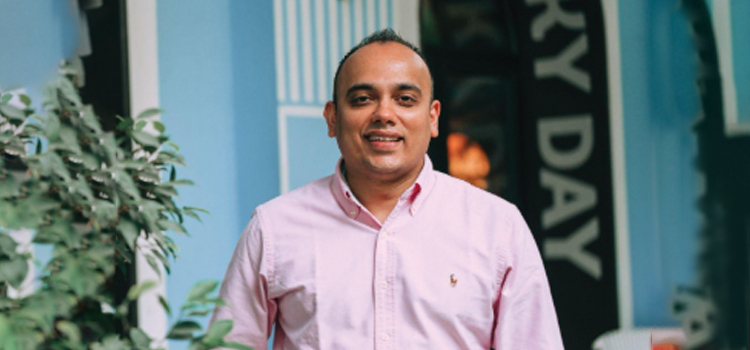
With a background in electronics and six years in
financial and strategic consulting at KPMG, Anirudh Kheny could not have asked
for a better career. Yet in 2016, Mr Kheny took an unconventional path into
hospitality. Since then, he has built six restaurant brands — Serious Slice,
Heyou, Daysie, Suzy Q, 1Q1 and Quarter House — operating under Bengaluru-based
Keen Mustard Ventures. Rather than approaching hospitality as an investor
operating at a distance, the managing partner of Keen Mustard Ventures
developed as a hands-on, self-taught restaurateur. “We build brands that are
emotionally magnetic, financially sound and built to last,” stresses
Mr Kheny in an engaging conversation
with Sharmila Chand.
Your five management mantras
Clarity before speed: A team can move quickly and still go
in the wrong direction. I try to ensure that people understand what we are
solving, why it matters and what a good outcome looks like.
Be close to the ground:
Reports are useful, but they never tell you everything. In hospitality, you
need to speak to guests, spend time with the team and see the operation for
yourself.
Give ownership, not just tasks:
People do their best work when they understand the larger objective and have
room to make decisions.
Address problems early:
Small operational issues rarely remain small. I would rather have a difficult
conversation today than a crisis three months later.
Respect both people and numbers:
A healthy culture without commercial discipline will not survive. A profitable
business without a healthy culture will eventually lose its best people.
A game that helps you in your work
I
enjoy golf, although I do not play nearly as much as I should. Golf is a very
honest game. You can prepare, choose your strategy and read the conditions, but
you still have to execute the shot. It teaches patience, risk management and
emotional control.
Turning point in your career
The
turning point was leaving a structured career in consulting and entering
hospitality. I had studied electronics and then spent six years in financial
and strategic consulting at KPMG. Hospitality was not an obvious next step.
Around 2015, Neeti and I were attracted by the Indian Express building in
Bengaluru, which exuded a rich heritage. The scale, architecture and
possibilities of that space immediately stayed with us. That eventually became
1Q1 Kitchen & Bar. Opening 1Q1 in 2017 changed the direction of my life.
Secret of your success
I
do not think there is one secret, and I am still uncomfortable describing the
journey as a finished success. If there is one habit that has helped me, it is
staying involved. I have never been interested in being a founder who only
reviews presentations or receives weekly reports. I like understanding how the
kitchen works, why guests are returning, where costs are slipping, what the
team is struggling with and whether the brand is delivering what we promised.
A person you admire who has inspired you
One
person who has had a very direct influence on my journey is my wife and
business partner Neeti. She encouraged me to consider hospitality when I was
still in consulting. She has a strong instinct for brands, spaces and how
people emotionally experience a place. I naturally tend to examine the
structure, feasibility and numbers. She often sees the human and creative side
before I do.
The best advice you have received
The
best advice came from my father: Every problem has a solution. He taught me not
to panic, not to avoid the problem and not to run away from it. The longer you
refuse to face a problem, the fewer options you generally have. His approach
was to understand the situation, confront it directly and begin working towards
a solution.
Your favourite books
A
few books have stayed with me for different reasons.
Setting the Table
by Danny Meyer captures something fundamental about hospitality. Service is
what you do, but hospitality is how you make someone feel. That distinction is
very relevant to our work.
Shoe Dog by Phil Knight is
refreshingly honest about how uncertain and untidy the entrepreneurial journey
can be. It does not present business building as a neat sequence of wins.
Alex Ferguson:
My Autobiography is fascinating because it goes beyond football. It is about
leadership, discipline, rebuilding teams and sustaining success over a long
period. What stood out for me was his ability to adapt as players, competitors
and circumstances changed without lowering the standards he expected.
Your five business mantras
Know
the economics before falling in love with the idea: Every entrepreneur needs
conviction, but conviction cannot replace arithmetic. Before investing,
understand the realistic revenue potential, capital requirement, margins,
break-even point and downside. The numbers do not kill creativity. They tell
you what the idea must achieve to survive.
Build something people have a reason to choose: A
business must solve a real problem or create an experience that people
genuinely want. At Keen Mustard Ventures, each brand has its own audience,
occasion and personality. We do not want to create six variations of the same
restaurant.
Execution is the real strategy: Many businesses have
good ideas. Far fewer can deliver those ideas consistently. In hospitality, a
guest does not experience the strategy presentation. The guest experiences the
food, lighting, music, cleanliness, service and how a problem is handled. A
brand becomes credible when the reality matches the promise repeatedly.
Protect cash and reputation: Revenue can create a
misleading sense of success. A growing business can still be unhealthy if
margins are weak, working capital is stretched or expansion is consuming cash
faster than the existing operation generates it. Reputation is equally
important because trust compounds slowly and can be damaged quickly.
Build the team and systems before you scale: A founder
can personally hold together one operation. That approach becomes dangerous as
the business grows. Before scaling, responsibilities, decision rights and
operating standards must be clear. At the same time, systems should protect the
personality of the brand, not flatten it.
Chand.sharmila@gmail.com

















Report By
View Reporter News