
ECONOMY
India-New Zealand FTA takes effect on October 20, all Indian exports get duty-free access
- IBJ Bureau
- Oct 20, 2026
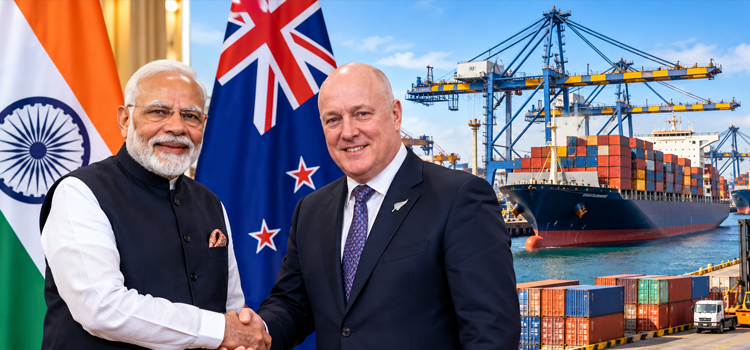
India’s free trade agreement (FTA) with New Zealand has come into force on October 20, giving all Indian goods duty-free access to the island country’s market.
The agreement will open India’s 140-crore consumer market to New Zealand goods and expand opportunities in services and agriculture.
It will also facilitate $20 billion in foreign direct investment (FDI) from New Zealand into India over the next 15 years.
Commerce and Industry Minister Piyush Goyal has said that the FTA aims to increase bilateral trade in goods and services from around $2.4 billion to about $4 billion by 2030.
Bilateral trade between India and New Zealand declined by around 11 per cent to $1.15 billion in 2025-26 from $1.3 billion in the previous fibabcial year.
New Zealand will provide 100 per cent duty-free market access to Indian exports from October 20, covering all tariff lines and the entirety of India’s current exports to the country.
This marks the first time that India has secured full duty-free access across all tariff lines from the start of an FTA.
New Zealand currently levies up to 10 per cent Customs Duty on Indian exports.
Fruits and vegetables, coffee, tea, cocoa and spices, cereals, processed foods, textiles and clothing, leather and footwear, pharmaceuticals, engineering goods, marine products, plastics and rubber are among the Indian goods that will benefit from the FTA.
India has excluded several product categories from tariff concessions to protect domestic interests.
These include dairy products such as milk, cream, whey, yoghurt and cheese as well as animal products other than sheep meat.
Under the agreement, New Zealand has agreed to open 118 services sectors and sub-sectors to Indian service providers.
These include information technology, professional services, telecommunications, construction, education, financial services and tourism.
India will offer tariff concessions on 70 per cent of its tariff lines, covering around 95 per cent of the current value of bilateral trade.
The remaining 29.97 per cent of tariff lines have been placed on the exclusion list.
For New Zealand products such as apples, kiwifruit, Manuka honey and albumins, India will provide duty concessions through quotas alongside minimum import price provisions and other safeguards.















Report By
View Reporter News